Supported Events

14th IAERE Annual Conference – IAERE 2026


The Italian Association of Environmental and Resource Economists – IAERE is glad to announce its 14th Annual Conference, which will be hosted by the Department of Economics and Management (DEM) and the School of International Studies (SIS) of the University of Trento, on February 12-13, 2026.

The conference will feature two distinguished keynote speakers: Antoine Dechezleprêtre (OECD)  and Namrata Kala (MIT Sloan). In addition to the plenary sessions, the programme will include a wide range of parallel sessions covering frontier research and policy-relevant topics in the field of environmental and resource economics.

The call for papers is open until October 13, 2025.

Visit the Conference’s website at https://www.geniusec.it/iaere-annual-conference-2026

READ MORE

Evaluating the economic benefits of environmental policies that save lives


The OECD Green Talks live on October 1, 2025 at 3:00-4:00 pm CEST will launch the new OECD report “Mortality Risk Valuation in Policy Assessment: A Global Meta-analysis of Value of Statistical Life Studies”.

The report explores findings from the largest meta-analysis of Value of Statistical Life studies ever attempted. Following a presentation of the key findings, panellists will discuss how they can be leveraged to support cost-benefit analyses and other economic assessments.

Speakers are EAERE members Shardul Agrawala (OECD), Olof Bystrom (OECD), Henrik Lindhjem (Menon Economics), Ståle Navrud (Norwegian University of Life Sciences), Lisa Robinson (Harvard T.H. Chan School of Public Health), and Pushpam Kumar (UNEP).

Website
Register here

READ MORE
Economy & carbon markets

WCEREA webinar – The political economy of carbon pricing


The World Council of Environmental and Resource Economists Associations – WCEREA hosted a policy webinar on “The political economy of carbon pricing” on September 9, 2025. Moderated by Marcelo Caffera (University of Montevideo and WCEREA Board member), it featured contributions from Bård Harstad (Stanford Graduate School of Business), Jeroen van den Bergh (Vrije Universiteit Amsterdam), and Catherine Wolfram (MIT Sloan School of Management).

Carbon pricing is widely regarded as a cornerstone of climate policy, yet current levels remain far below what is needed to achieve the Paris Agreement targets. The webinar explored why progress has been slow and how international trade, treaties, and public opinion could help raise ambition.

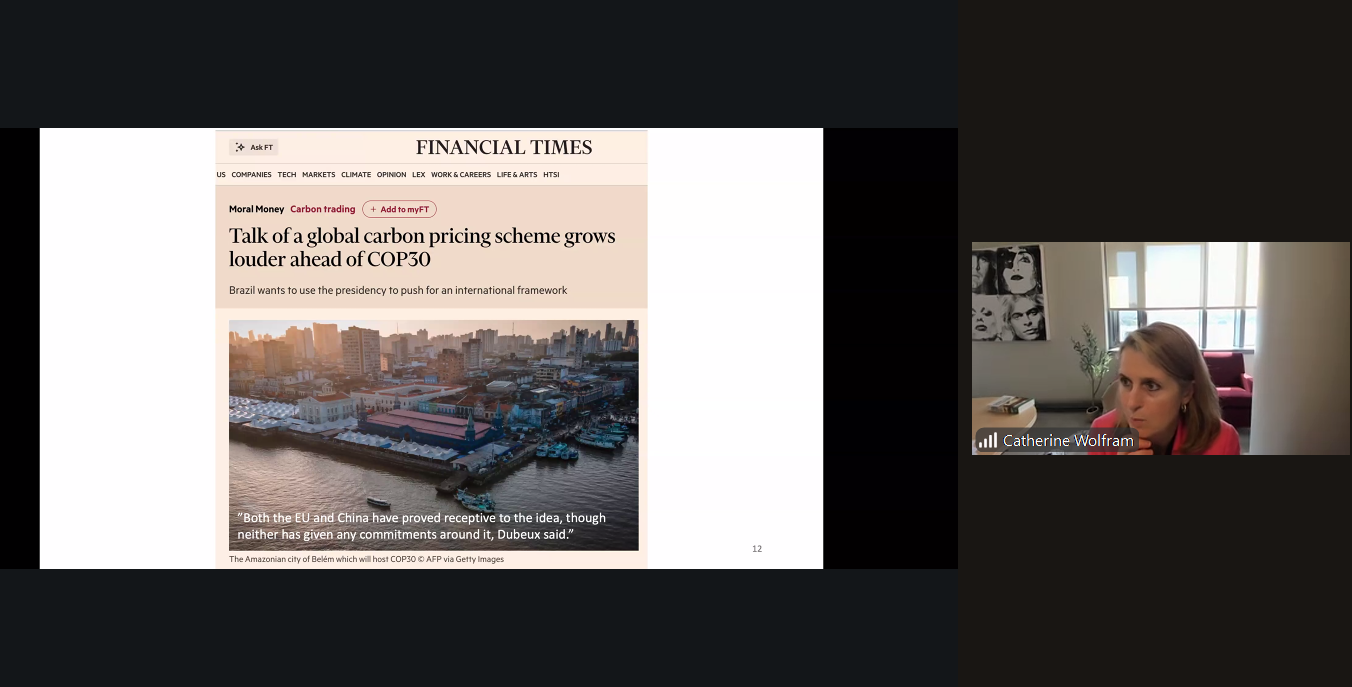
Catherine Wolfram highlighted the role of the EU Carbon Border Adjustment Mechanism (CBAM) in reshaping incentives. By charging imports at the border, CBAM reduces the benefits of free-riding and encourages partners such as Brazil and China to develop their own carbon markets. She noted that lower-income countries with cleaner electricity systems may also benefit in such a framework. Wolfram referred to her forthcoming report Building a Climate Coalition: Aligning Carbon Pricing, Trade and Development, which outlines how coordination in heavy industries could advance global carbon pricing.

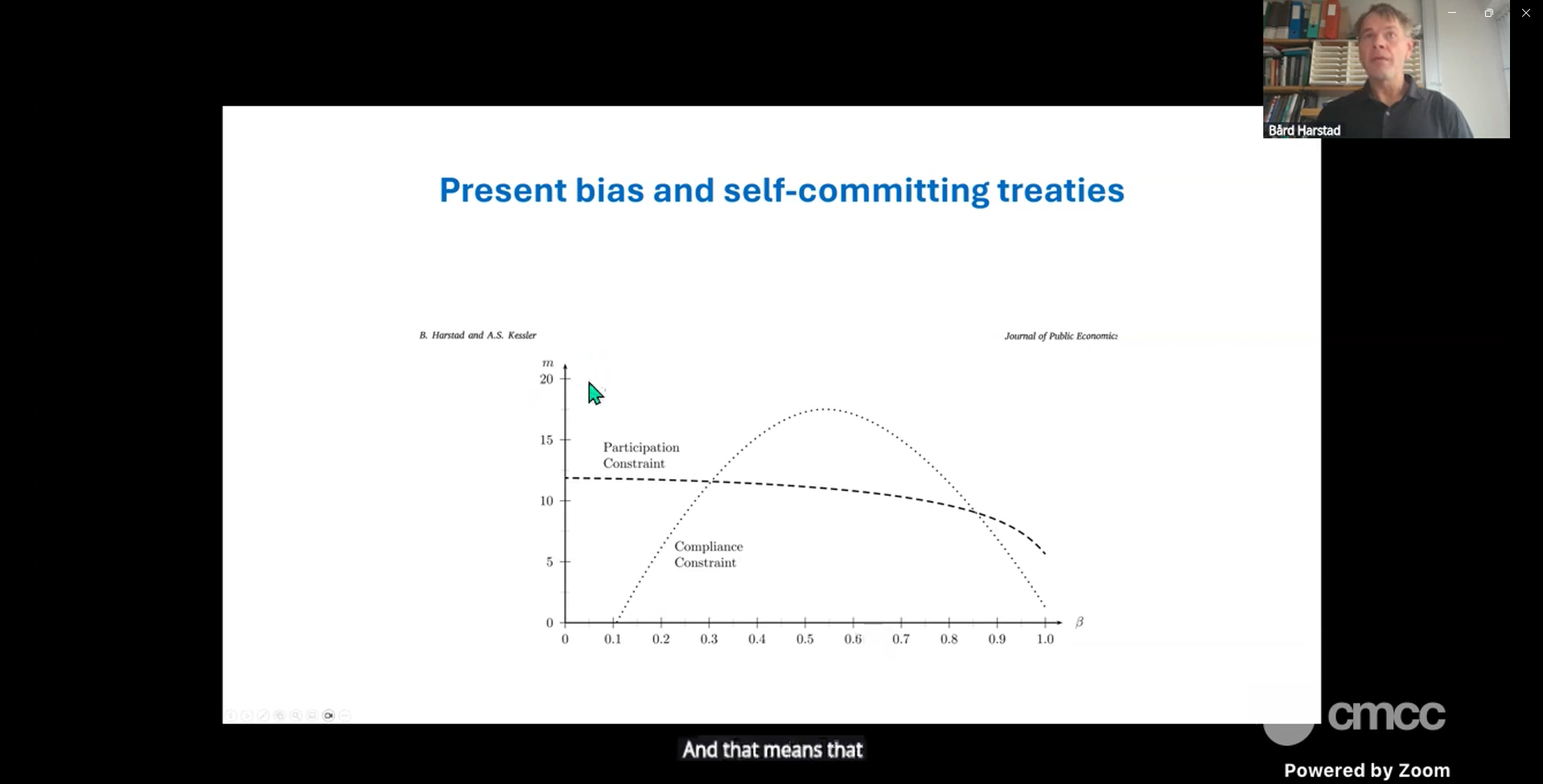
Bård Harstad underlined that carbon pricing not only reduces emissions but also stimulates innovation and renewable energy through spillover effects. He pointed to political economy challenges such as lobbying, protection of connected firms, and policy reversals after elections, which weaken commitments. International treaties can make future deviation more costly, increasing the credibility of carbon pricing. Harstad also stressed the potential of trade policy, showing how tariff functions and contingent trade agreements can provide incentives for countries to adopt and maintain stronger policies.

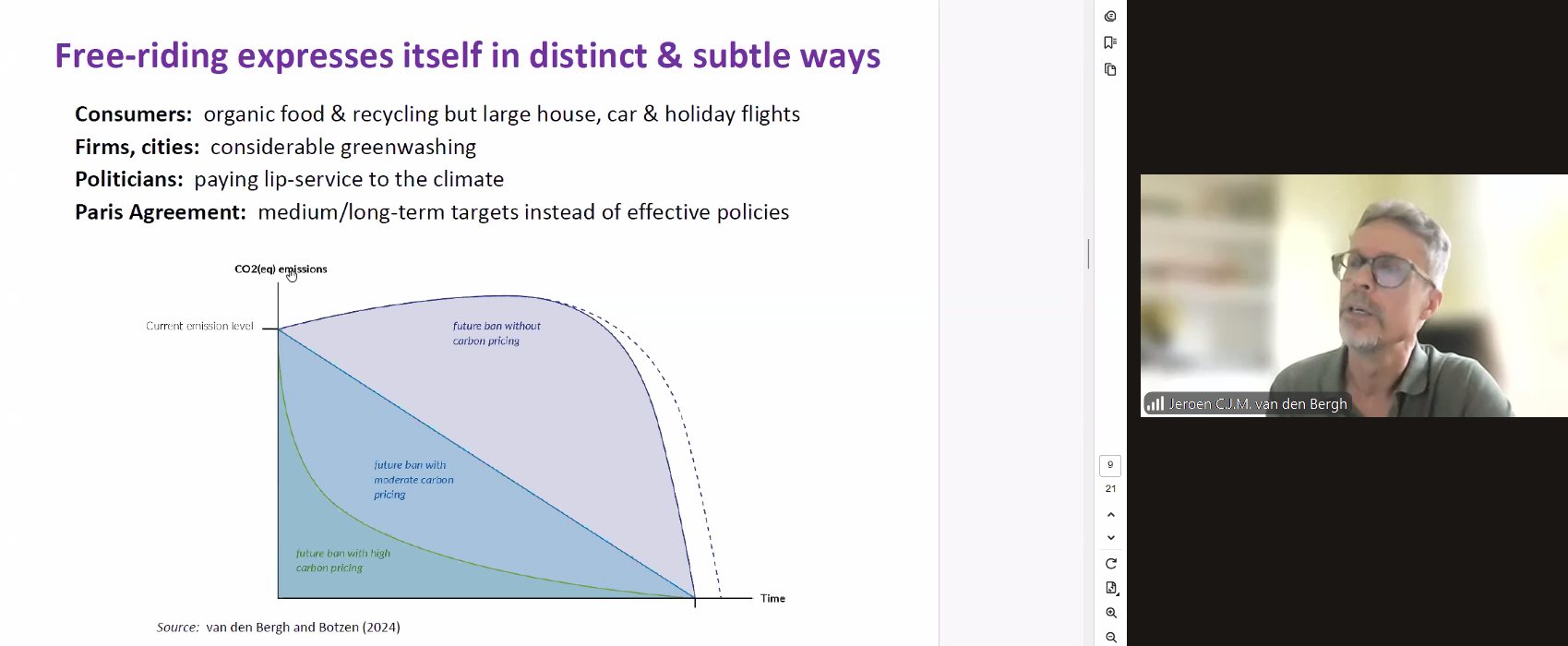
Jeroen van den Bergh focused on public support for carbon pricing, stressing that acceptance evolves over time. Citizens’ perceptions are influenced by how policies are framed, the narratives surrounding them, and their interaction with other measures. He identified opportunities to broaden the arguments for carbon pricing, combine it with complementary policies, and build feedback loops between public opinion and implemented measures.

The discussion concluded that high carbon prices are unlikely to be politically viable if pursued in isolation. Instead, carbon pricing should be part of a broader mix that includes complementary domestic measures, international coordination, and trade-based mechanisms, offering a more effective path toward ambitious and durable climate action.

Report by Antonia Pacelli, EAERE Communication Support Team.

Watch the video recording on the WCEREA YouTube channel.

Access the panelists’ slides:

Catherine Wolfram
Bård Harstad
Jeroen van den Bergh
READ MORE
Schools

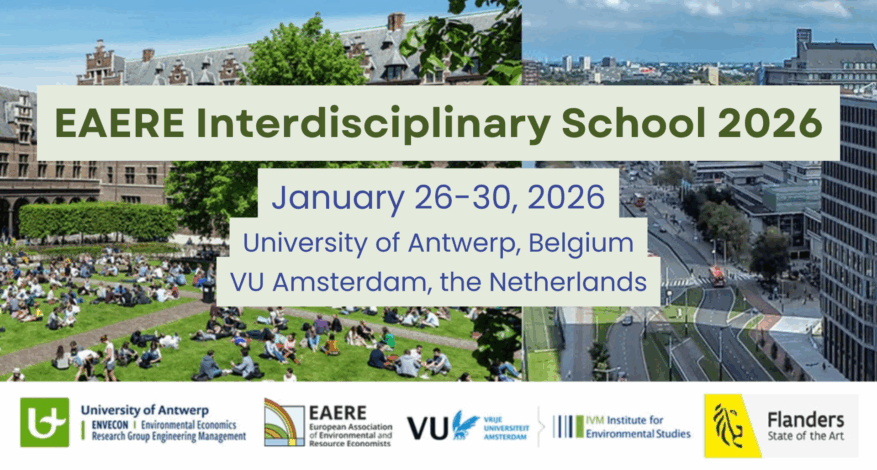
EAERE Interdisciplinary School in Resource and Environmental Economics – Natural capital and ecosystem services valuation


Climate change and environmental degradation are an existential threat. One of the priorities in the European Green Deal is the protection of Europe’s oceans, seas, and environment. The direct and indirect benefits people obtain from nature are referred to as ecosystem services. This concept provides a formal framework for analyzing and quantifying nature’s contributions to human well-being. Valuing and monitoring the state of ES is essential for assessing the socio-economic consequences of service degradation and informing sustainable management practices. In recent years, the scientific literature on ecosystem service valuation has grown exponentially, and methods range from qualitative research to detailed quantitative assessment models.

To further contribute to the preservation of the marine and terrestrial environment for future generations, there is a strong need to further develop and implement appropriate methods for the valuation of natural resources, to understand how these values can be coupled with output from natural capital models, and how the combined insights can be correctly used within existing methods for project evaluation.

To meet this demand, this PhD expert course focuses on monetary and non-monetary valuation methods, as well as on cost benefit analysis and real options analysis as evaluation tools. As the actual actions to protect the natural environment are taken at the policy level, integration of the different work fields is required.

A five-day event with methods lectures, keynote speakers bridging methods to field applications, and paper presentation sessions with discussants from the pool of participants and senior researchers. Participants will stay in Amsterdam from Monday to Wednesday and will then travel to Antwerp for the second part of the Interdisciplinary School (Wednesday – Friday).

School’s website

READ MORE
Supported Events

IAERE School ” Input Output Analysis for Environmental and Resource Economics”


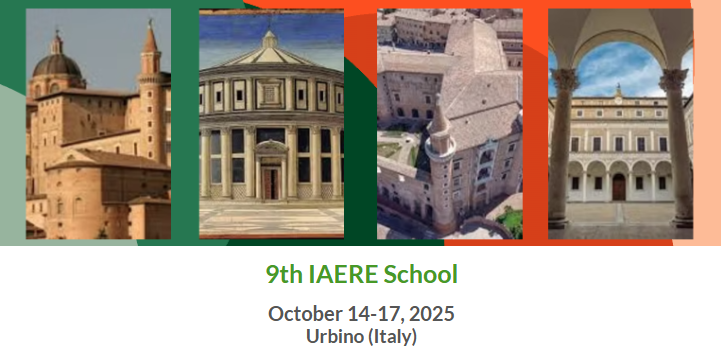
The Department of Economics, Society, Politics of the University of Urbino Carlo BoIUSS Pavia and the Italian Association of Environmental and Resource Economists (IAERE) are delighted to announce the 9th edition of the IAERE School on ” Input Output Analysis for Environmental and Resource Economics”. The School will be held on 14-17 October 2025 at Palazzo Passionei in Urbino (Italy).

The School

Input-output analysis is one of the most widely applied methods to evaluate the link between the economy and the environment accounting for the inter-dependency of industries and countries. Developed by Wassily Leontief (Nobel Prize in Economics 1973) in the 1930s, input-output analysis has recently regained the attention of the academic community and policy makers for the evaluation of the environmental and soc io-economic consequences of trade and structural change.

The aim of the course is twofold. The course intends to introduce the basics of input-output analysis, with both theoretical and practical lectures on applications to environment-related issues. Recent developments, extensions and applications of input-output analysis for the study of environment-related issues will be presented and discussed.

  • Foundations of input-output and national accounting
  • The Leontief model
  • Environmentally Extended Input-Output Analysis: theory and applications
  • Multi-regional input output analysis
  • Structural decomposition analysis for environmental and resource economics
  • Overview of existing input-output databases
  • Input-output to analyse extreme events
  • I-O and network analysis

The Schedule

The programme of the School will consist of four days (Tuesday morning to Friday afternoon) of teaching by prominent academics. The School will also offer the opportunity to students to present a research proposal. The best proposal will be awarded with the IAERE Visiting PhD Scholarship.

The School will be organized in 12 teaching modules and 4 discussion sessions:

  • 9:30-11:00 Teaching module
  • 11:00-11:30 Coffee break
  • 11:30-13:00 Teaching module
  • 13:00-14:30 Light lunch
  • 14:30-16:00 Teaching module
  • 16:00-16:30 Discussion

Faculty

Faculty members are Alessandro Caiani (IUSS Pavia), Erik Dietzenbacher (University of Groningen), Jlenia Di Noia (IUSS Pavia), Tiziano Distefano (University of Firenze), Carolyn Fischer (Development Research Group, The World Bank), Leonardo Niccolò Ialongo (Complexity Science Hub) and Giovanni Marin (University of Urbino ‘Carlo Bo’).

Registration and participation fees

The minimum number of students for the activation of the program in person is 15. The maximum number is 30. Participation to School will be in person.

Registration to the School is reserved for IAERE Members. Participants who are not yet IAERE members will be kindly requested to register for IAERE Membership.

Participation fees are the following:

  • Students: EUR 100
  • IAERE members: EUR 450

The registration fee includes the course material, participation diploma, coffee breaks and light lunches included in the School programme, one social dinner. Accommodation is not included.

Online application is available here.

Organisers

The Conference is organised by the Department of Economics, Society, Politics of the University of Urbino Carlo Bo and by IUSS Pavia. The event is supported by EAERE.

Important Dates

19 September 2025 – Deadline for applications
23 September 2025 – Acceptance notifications
29 September 2025 – Deadline for registration
14-17 October 2025 – IAERE School

Further information

School’s website: https://www.iaere.org/iaere-summer-school

For more information, please contact iaere@iaere.org.

READ MORE
Supported Events

envecon 2026

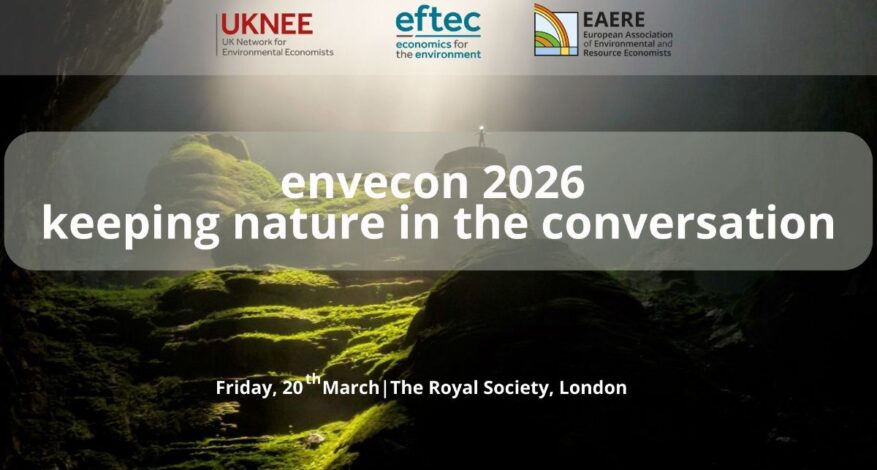
The UK Network for Environmental Economists – UKNEE is glad to announce its next annual applied environmental economics conference, envecon,  to be held on March 20, 2026 at The Royal Society in London (UK).

envecon 2026 Agenda

🕘 09:30 – 10:00 | Keynote Speaker

Professor Anjali Goswami — Chief Scientific Adviser & Director-General Science, Data and Analysis at the UK Department for Environment, Food and Rural Affairs.

🕙 10:00 – 11:10 | Session 1: Professor Ken Willis Session on Next Frontier in Economic Valuation: Biodiversity
Chair: Prof Kate Jones (UCL)

🕚 11:25 – 12:50 | Session 2: Professor David Pearce Session on Economics for Environmental Policy
Chair: Assoc Prof Marije Schaafsma (IVM, Amsterdam)

🕜 13:40 – 14:40 | Session 3: Net Zero for Agriculture: Behavioural and Economic Levers for a Just Transition
Chair: Dr Sanchayan Banarjee (King’s College London)

🕞 14:40 – 15:40 | Session 4: Nature in Conversation with Other Policy Areas
Chair: Dr James MacGregor (Lifescape Project)

🕓 16:00 – 17:00 | Session 5: Bridging the Divide: Routes to Land Economic Messages in Westminster

Masterclass by Matthew Browne, Head of Public Affairs, The Wildlife Trusts — practical insights and group activities on communicating economic evidence to policymakers.

📍 Poster Session (timing interleaved/throughout)

Registration is now open – book your tickets here


More information

Discover more about envecon past editions at https://www.uknee.org.uk/envecon.

For more information, please contact uknee@uknee.org.uk.

READ MORE

AERE’s 2025 Fall Virtual Workshop


The Association of Environmental and Resource Economists, EAERE’s Northern America sister association, is glad to announce AERE’s Fall Virtual Workshop to take place on October 23-24, 2025 at 1:00-4:30 pm ET. Climate-driven weather extremes are reshaping natural disaster risks and insurance markets. This two-day workshop brings together leading researchers and policymakers to tackle the challenges. The workshop is free for AERE members. Discover the agenda and register at this link.

READ MORE

Summer School in European Environmental Taxation and Policies (EU-SUSEET), V edition


The Summer School in European Environmental Taxation and Policies (EU-SUSEET), V edition, is organised in the framework of a Jean Monnet Module funded by the European Commission and has been designed to provide participants with expertise on environmental taxation and policies, useful for the construction of both an academic and a professional career, contributing to the creation of a new generation of European environmental tax lawyers and economists. It will provide the occasion for participants from all over the world to discuss with eminent professors and experts working in these fields.

Check the School’s brochure for more details.

The programme is available at https://www.suseet.eu/wp-content/uploads/2025/08/PROGRAM-SUSEET-SUMMER-SCHOOL-IN-EUROPEAN-ENVIRONMENTAL-TAXATION.pdf

Suseet website is available at Home – SUSEET

Keynote speakers include:
  • Federica Pitrone, Head of International Tax at Intesa Sanpaolo
READ MORE
Ecosystems & biodiversity

EAERE 2025 Policy Session on “Climate change, biodiversity and ecosystem services on the way to COP30”


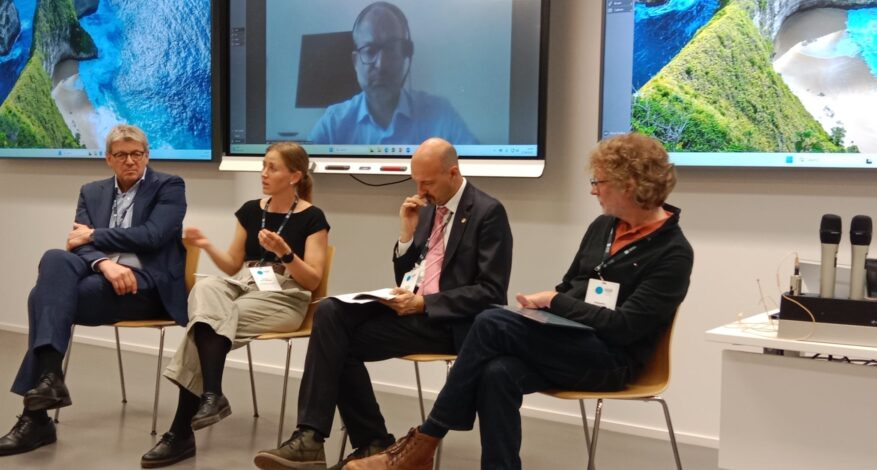
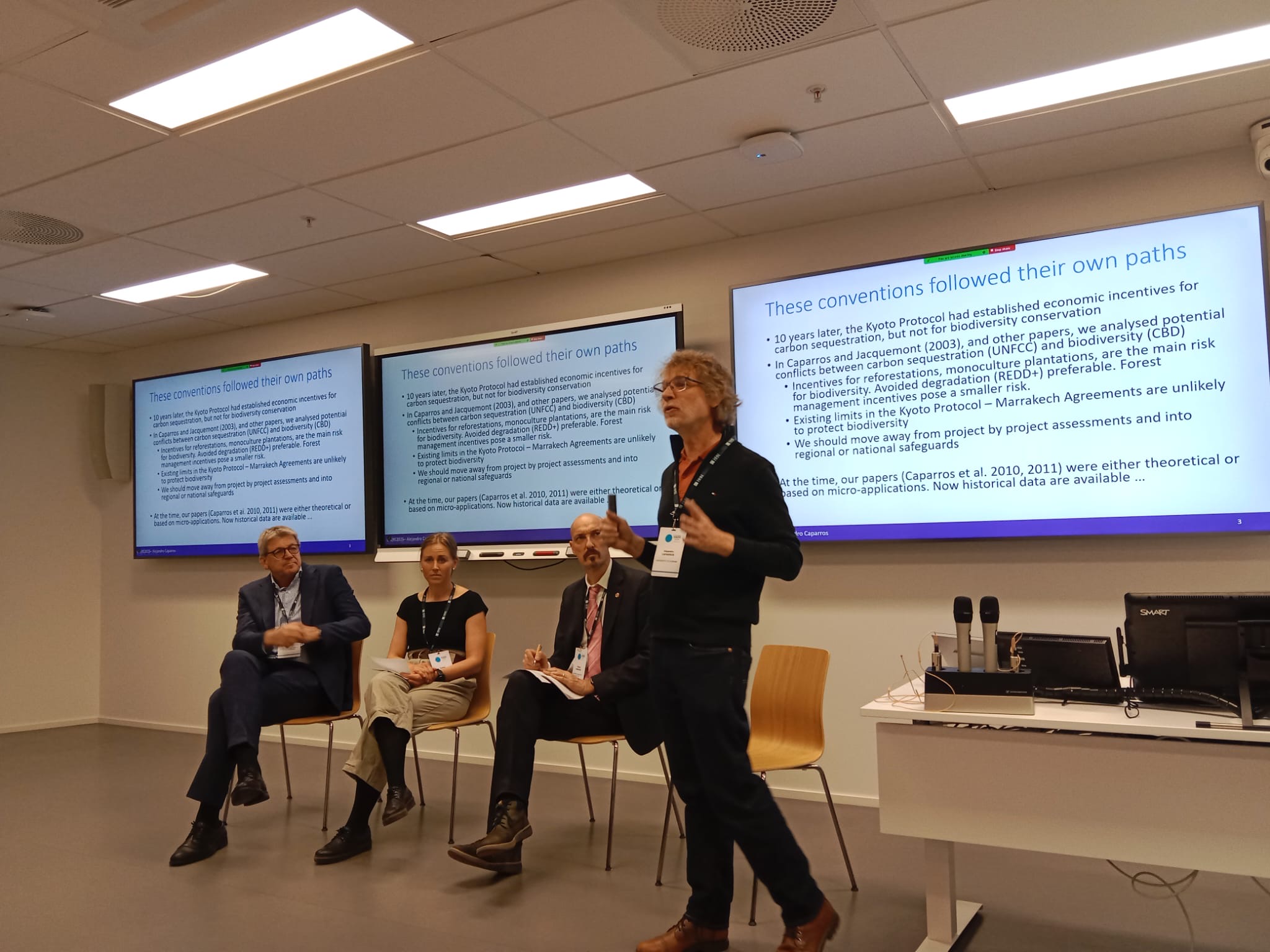
The session organised by the EAERE Policy Outreach Committee – POC “Climate change, biodiversity and ecosystem services on the way to COP30“, held during EAERE Annual Conference 2025 in Bergen (Norway) on June 17, 2025 was chaired by Simone Borghesi, EAERE President, and featured contributions by Philippe Tulkens, European Commission DG RTD, Alejandro Caparrós, Durham University, Stale Navrud, Norwegian University of Life Sciences, and Katinka Holtsmark, University of Oslo.

The United Nations Conference on Environment and Development (UNCED) in 1992, also known as Rio “Earth Summit”, was one of the first global attempt to address the interlinked crises of climate change, biodiversity loss, and ecosystem degradation (IPBES, 2019). Three decades later, the need for action has dramatically increased. Global temperatures have already risen by 1.1°C above pre-industrial levels (IPCC, 2022), significantly altering marine, terrestrial and freshwater ecosystems all around the world (Dasgupta, 2021; FAO, 2024). Building on this urgency, parties at COP29 in Baku agreed a deal on rules for a global market to buy and sell carbon credits. These new agreement opens vast opportunities for integrating biodiversity and ecosystem services into carbon markets, further enhancing their role in climate change mitigation. COP30 in Belém, besides bringing together countries in Brazil after more than 30 years from Rio 1992, presents a crucial opportunity to build on the momentum from COP29, uniting the Global North and South in strengthening partnerships. In such an arena, how can carbon markets be designed to benefit climate action and biodiversity preservation? And how can Europe best support Global South in biodiversity protection at this critical juncture?

The session focused on two key topics while approaching COP30. First, building on the IPBES-IPCC previous studies on biodiversity and climate (IPBES, 2021), it explored how biodiversity and ecosystem services can be integrated into climate action, focusing particularly on carbon credit systems that help both mitigate climate change and protect biodiversity. The session also discussed how to strengthen cooperation between the Global North and South, building on the progress made at COP29. Special attention was given to Europe’s role in supporting biodiversity protection in the Global South through financial support and capacity-building, aiming to create more equitable and collaborative global solutions to climate challenges.

Watch the video recording on the EAERE YouTube channel.

READ MORE
Supported Events

11th FSR Annual Conference on the Economic Assessment of European Climate Policies


The Climate Area of the Florence School of Regulations – FSR is pleased to announce its 11th Annual Conference on the Economic Assessment of European Climate Policies to take place at the European University Institute in Florence on December 2-3, 2025. The two-day academic conference will follow a high-level policy conference on the assessment and acceptability of net-zero climate policies scheduled on Monday, 1st December 2025.

The Conference

The programme of the academic conference will cover some of the main climate policies at the EU and national and subnational levels. It will include a keynote speech, plenary speeches as well as academic sessions focusing on carbon pricing and energy transition. To honour the memory of David W. Pearce on the 20th anniversary of his passing, a dedicated roundtable discussion on his legacy will be organised in collaboration with EAERE.

Simone Borghesi, Director of the FSR Climate, Professor and Deputy Rector for International Relationships at the University of Siena and EAERE President, will chair the conference.

Invited speakers are:

  • Ben Groom, University of Exeter, London School of Economics
  • Other speakers TBC

Call for papers

The Conference Scientific Committee welcomes economic and interdisciplinary research contributions. Applicants are warmly invited to submit papers focusing on:

  • Carbon pricing, emissions trading, and environmental taxation;
  • Energy transition, energy efficiency and renewable energy;
  • Biodiversity and ecosystem services.

Organisers will consider papers on the above topics for presentation at the conference. The presenting author should send the submissions, including the title, abstract and full text, in PDF format to FSRClimate@eui.eu by Sunday, 21st September 2025.

The Conference Scientific Committee will evaluate submitted papers, and FSR Climate will communicate the results by Tuesday, 7th October.

Participation fees

  • Student (presenting a paper): 280 EUR
  • Speaker (presenting a paper): 430 EUR
  • Participant (not presenting): 520 EUR

The fee includes two lunches, a cocktail dinner in the city centre of Florence, and four coffee breaks. Registration and logistics details will be available closer to the date on this page.

Participants in the academic conference are warmly invited to attend the high-level conference on the assessment and acceptability of net-zero climate policies in Europe and beyond for free, scheduled on Monday, 1st December.

Organisers

The Conference is organised by the Florence School of Regulation – Climate with the support of EAERE.

Important Dates

21 September 2025: Deadline for submissions

7 October 2025: Notification of acceptance

1 December 2025: High-level Conference on the assessment and acceptability of net-zero climate policies in Europe and beyond

2-3 December 2025: 11th Annual Conference on the Economic Assessment of European Climate Policies

Further information

For further information, please contact Lea Heinrich at lea.heinrich@eui.eu and FSRClimate@eui.eu.

READ MORE