JEEM / REE Workshop on Nonmarket Valuation


Post-Congress 2026 Workshop

The Journal of Environmental Economics and Management (JEEM) and Resource and Energy Economics (REE), in collaboration with the Faculty of Economics and Business at the University of the Basque Country and the Basque Centre for Climate Change (BC3), are delighted to announce a call for abstracts for the third joint Workshop on Nonmarket Valuation. Similar to the first two workshops held back-to-back to EAERE Conferences in 2024 and 2025, the third workshop will be staged following the 7th World Congress of Environmental and Resource Economists (WCERE).

While the WCERE will be held in Carcavelos, Portugal, 29 June – 3 July, the workshop itself will take place at the University of the Basque Country (UPV/EHU) in Bilbao, Spain, a short direct flight from Lisbon.

The workshop will consist of two full days of presentations, starting in the morning of July 6, and ending in the afternoon of July 7.

Deadline for abstract submission: 6 March 2026

Event webpage

READ MORE
Other

The legacy of David W. Pearce: a dedicated roundtable


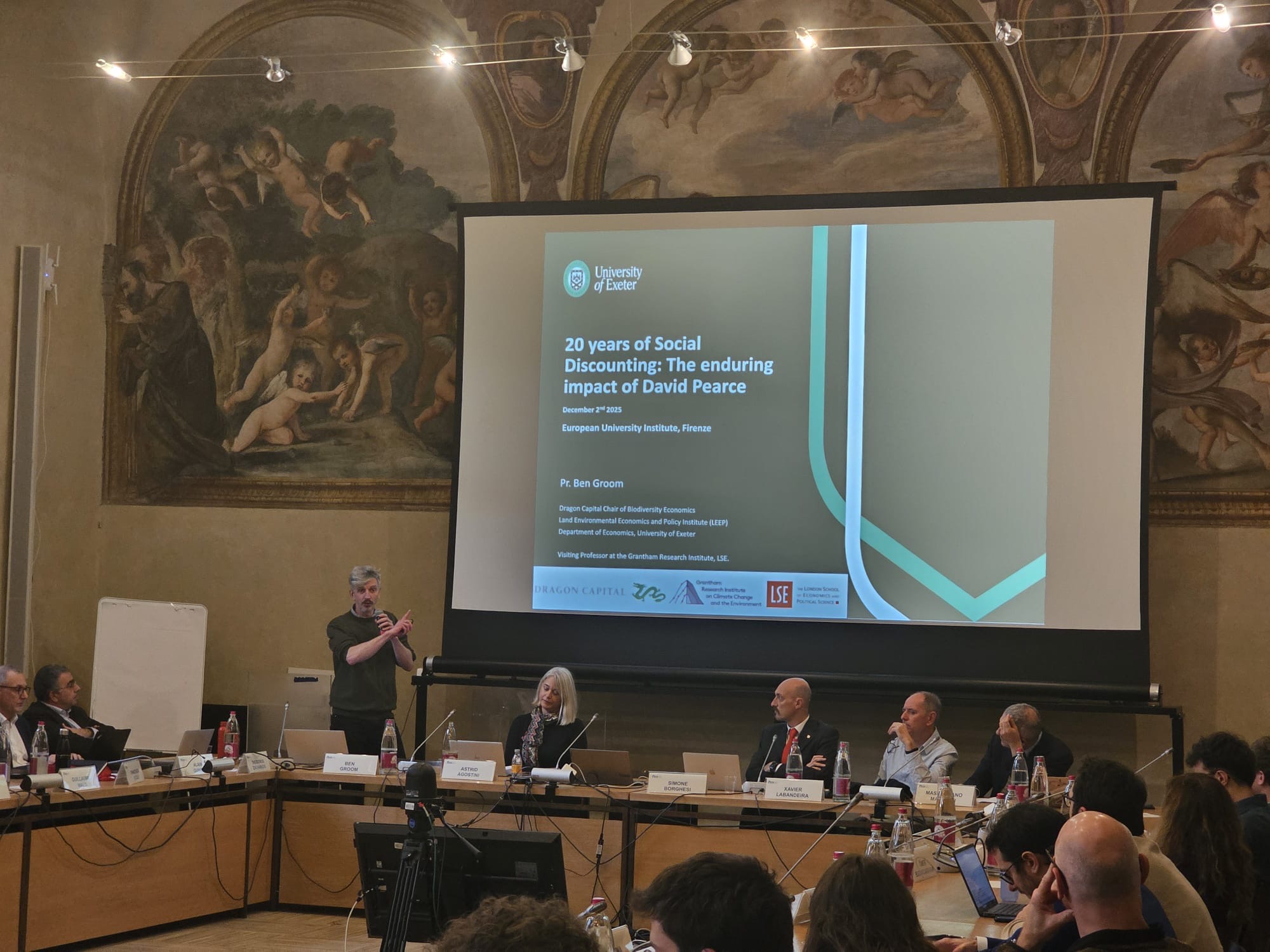
To honour the memory of David W. Pearce on the 20th anniversary of his passing, a dedicated roundtable discussion on his legacy was organised by the Florence School of Regulation in collaboration with the EAERE Policy Outreach Committee during the 11th Annual Conference on the Economic Assessment of European Climate Policies. The session took place on December 2nd, 2025 in Florence (Italy) and was chaired by EAERE President Simone Borghesi (EUI, University of Siena). Invited speakers included Astrid Agostini (FAO), Ben Groom (University of Exeter), Xavier Labandeira (University of Vigo), and Massimiliano Mazzanti (University of Ferrara).

Watch the video statements from Simone Borghesi, Frank Convery, and Ayumi Onuma.

EAERE members and roundtable speakers Simone Borghesi, Xavier Labandeira and Massimiliano Mazzanti.
EAERE member Ben Groom.
READ MORE
Policy Outreach Events

Climate change, biodiversity and ecosystem services on the way to COP30 – Policy Session at EAERE 2025


Presenters:

  • Philippe Tulkens, European Commission DG RTD
  • Alejandro Caparrós, Durham University
  • Stale Navrud, Norwegian University of Life Sciences
  • Katinka Holtsmark, University of Oslo

The session, organized by the Policy Outreach Committee, will focus on two key topics as we approach COP30.

First, building on the IPBES-IPCC previous studies on biodiversity and climate (IPBES, 2021), it will explore how biodiversity and ecosystem services can be integrated into climate action, focusing particularly on carbon credit systems that help both mitigate climate change and protect biodiversity.

The session will also discuss how to strengthen cooperation between the Global North and South, building on the progress made at COP29. Special attention will be given to Europe’s role in supporting biodiversity protection in the Global South through financial support and capacity- building, aiming to create more equitable and collaborative global solutions to climate challenges.

Watch the session’s recording on YouTube.

READ MORE
Supported Events

14th Mannheim Conference on Energy and the Environment – MCEE 2026


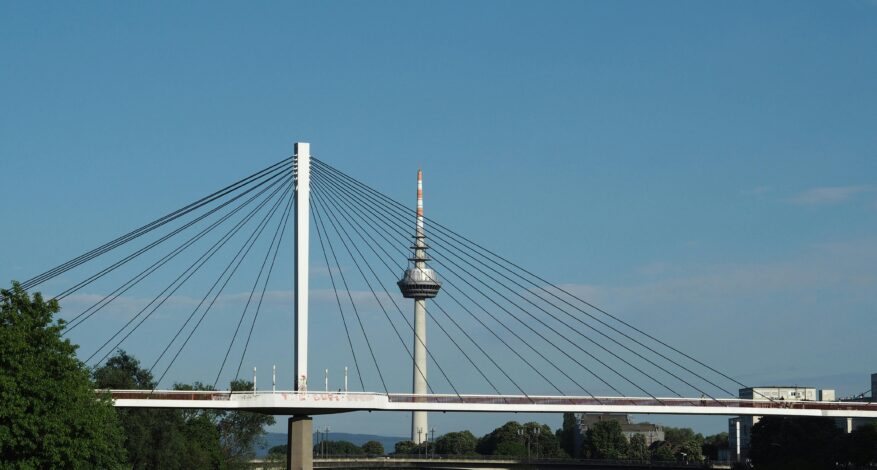
ZEW Mannheim is pleased to announce the 14th Mannheim Conference on Energy and the Environment – MCEE 2026 to be held on May 19-20, 2026 at the ZEW – Leibniz Centre for European Economic Research in Mannheim (Germany). The Conference is supported by EAERE.

The Conference

The MCEE aims to promote the exchange of ideas among researchers at all career stages working in the fields of energy, climate, and environmental economics. Its parallel sessions enable a wide variety of topics and intensive discussions among researchers sharing similar interests. The conference provides an inclusive platform that bridges different methodological perspectives, featuring empirical analyses, theoretical work, behavioral approaches, and simulation modeling.

Keynote speakers

Call for papers

Interested researchers are invited to submit an academic paper. Extended abstracts (min. 1,000 words) are accepted. However, all else equal, preference will be given to completed papers.  Topics may cover, but are not limited to, the following economic fields:

  • Environmental economics
  • Energy economics
  • Climate economics
  • Public economics

Submissions should be uploaded to the conference submission portal no later than January 31, 2025.

Fees

The conference fee is EUR 290. This covers the conference materials, meals, refreshments, coffee breaks, and the conference dinner. Participants who present a paper will pay a reduced fee of EUR 240. PhD students (both presenting and non-presenting) pay a reduced fee of EUR 190. Presenters are asked to discuss a paper. Authors shall send their papers to the discussant at least two weeks before the start of the conference.

Important dates

January 31, 2026: Submission deadline
March 16, 2026: Notification of acceptance
April 12, 2026: Registration as presenter
May 3, 2026: Registration as participant only
May 19-20, 2026: Conference

Scientific committee

MCEE 2026 scientific committe’s members are Christoph Böhringer (University of Oldenburg, DE), Antoine Dechezleprêtre (OECD, FR), Eugenie Dugoua (London School of Economics, UK), Natalia Fabra (Fundación Centro de Estudios Monetarios y Financieros (CEMFI), ES), Massimo Filippini (ETH Zürich, CH), Gautam Gowrisankaran(Columbia University, US), Kathrine von Graevenitz (ZEW and University of Mannheim, DE), Martin Kesternich (University of Paderborn, DE), Andreas Lange (University of Hamburg, DE), Matti Liski (Aalto University, FI), Andreas Löschel (Ruhr-University Bochum, DE), Erica Myers (University of Calgary, CA), Sebastian Rausch (ZEW and University of Heidelberg, DE), Oliver Schenker (ZEW Mannheim, DE), Ulrich Wagner (University of Mannheim, DE) and Frank Wolak (Stanford University, US).

Organisers

MCEE 2025 organisers are Sebastian Rausch (ZEW Mannheim and University of Heidelberg), Kathrine von Graevenitz (ZEW Mannheim and University of Mannheim) and Oliver Schenker (ZEW Mannheim).

Additional information

Contact mcee2026@zew.de for any further information, and visit the Conference’s webpage for more information.

READ MORE
Supported Events

Winter School: Assessing Economic Policies Using the Real Options Methodology


The Wageningen School of Social Sciences (WASS) and the Agricultural Economics and Rural Policy Group (AEP) are glad to announce the Winter School on “Assessing Economic Policies Using the Real Options Methodology” to be held on February 2-6, 2026 in Wageningen (the Netherlands). The course is supported by EAERE.

The course

This course will address the issue of irreversibility from an economic point of view. Different approaches dealing with irreversibilities have emerged in the economic literature. The two most prominent once are the quasi option and real option value theory. Application of both approaches requires technical skills most students find difficult. The objective of the course is to introduce the origins of the quasi option value and real option values, to teach the methods most commonly used (discrete methods such as decision trees; continuous time, continuous state models using stochastic processes; Itó calculus), and to discuss and practice various applications including non-renewable resource use, technology adoption, climate change, forestry, and food- and bio-safety. The course will include two parts. One week of lectures and exercises with assignments and a course paper. For passing the course students need to participate in lectures and exercises (min. 90%) and submit the course paper within six month after the course.

Lecturers

Learning outcomes

After successful completion participants are expected to be able to:

  • Know the economic implications and relevance of the irreversibility effect;
  • Understand economic papers that apply real option models;
  • Apply discrete state models for decision under uncertainty and irreversibility;
  • Know the steps from discrete time, discrete state to continuous time, continuous stat models;
  • Develop real option models and anlyse the results using numerical simulation methods.

Registration

The course is designed for PhD candidates. Min. 10 participants, max. 25 participants. You can register here, selecting the course name.  Deadline for registration is set on December 31, 2025.

More information

Details, course fees and schedule are available on the course’s web page.

READ MORE

Launch of the OECD Environmental Outlook


The OECD “Environmental Outlook on the Triple Planetary Crisis: Stakes, Evolution and Policy Linkages” will be launched on November 26, 2025 at 3:00 – 4:15 pm CET during a dedicated webinar. Drawing from this specific report, OECD has held policy sessions at EAERE Conferences on advancing environmental economics to support integrated climate-biodiversity-pollution policymaking.

Register at https://www.oecd.org/en/events/2025/11/tackling-the-triple-planetary-crisis-of-climate-change-biodiversity-loss-and-pollution-launch-of-the-oecd-environmental-outlook.html

READ MORE
Cities

EAERE at COP30 – Local climate finance for a just transition to carbon neutral and resilient cities

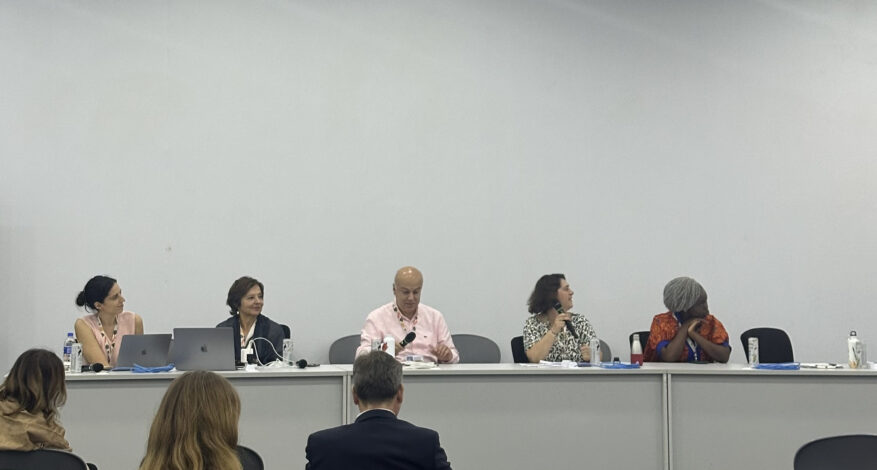
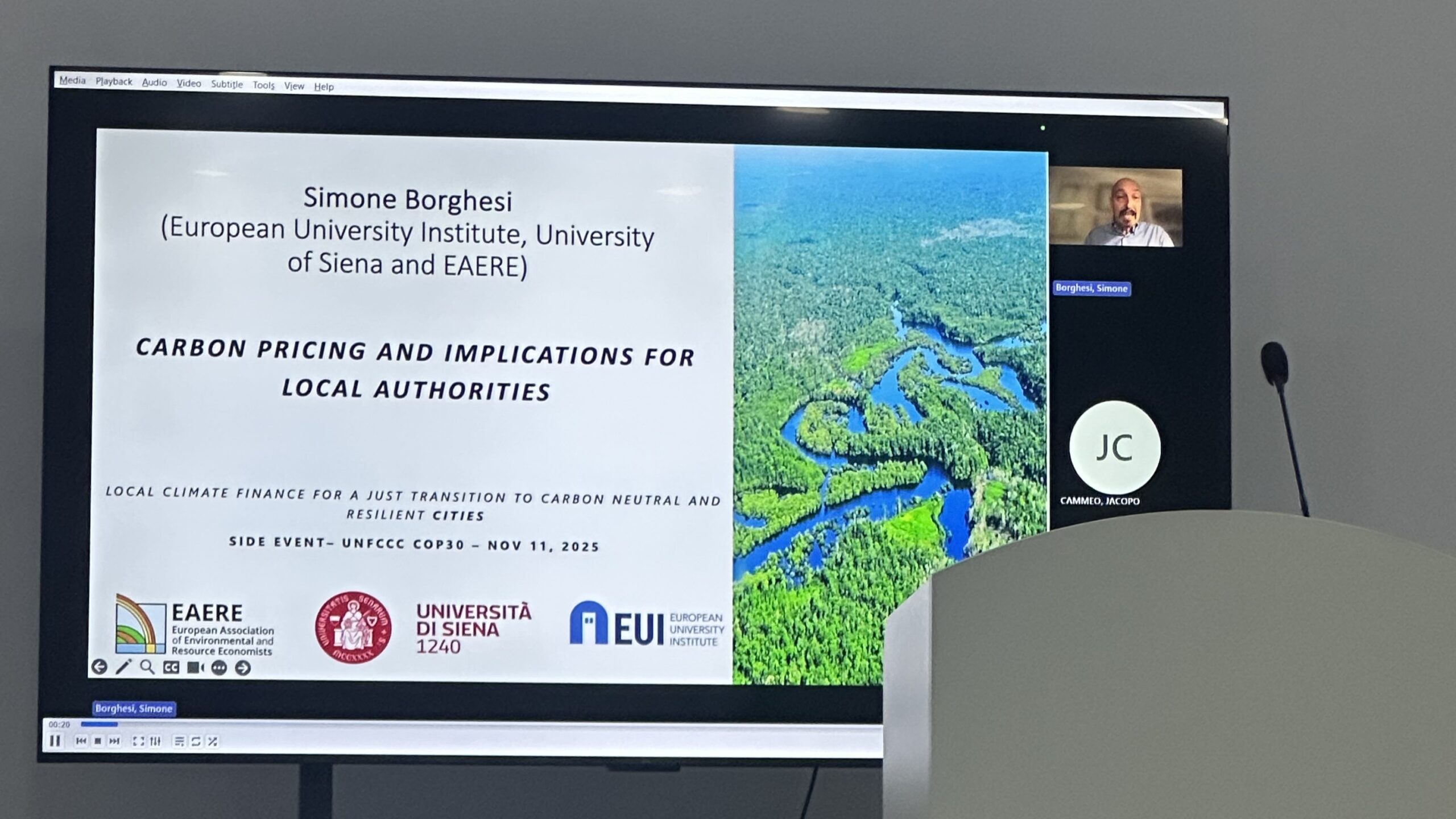
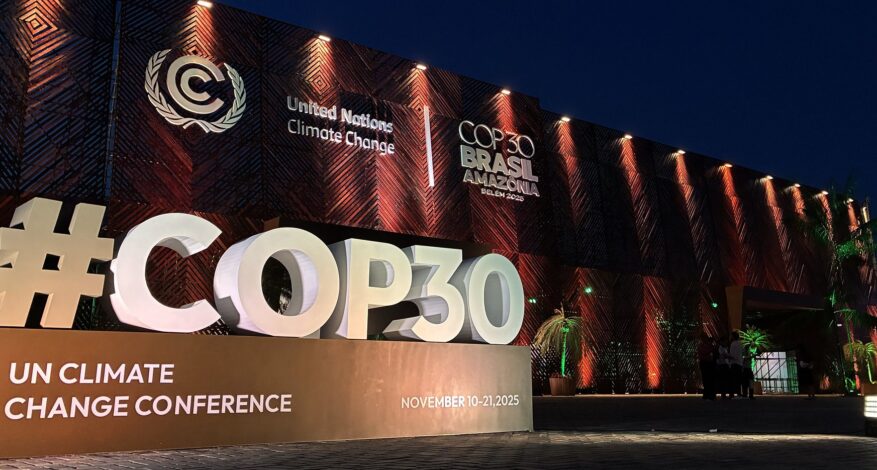
The 30th meeting of the Conference of the Parties (COP30) to the UN Framework Convention on Climate Change (UNFCCC) took place in Belém (Brazil) on November 10-21, 2025. EAERE participated in the COP30 official side event on “Local climate finance for a just transition to carbon neutral and resilient cities“. Co-organised with SUR Lab Bocconi University, Conseil des Communes et Régions d’Europe (CCRE / CEMR), and Polytechnic of Turin, the event was held on November 11, 2025 at 18:30 – 20:00 Local Time / 22:30 – 24:00 (CET) in Belém (Brazil).

Session report

The workshop explored how local climate finance can support a just transition toward carbon-neutral and resilient cities. Moderated by Edoardo Croci (Bocconi University, SUR Lab; Spoke 1, MUSA Scarl), the session discussed governance frameworks and innovative financial instruments that enable cities to implement ambitious climate actions. Through a series of case studies, speakers examined how subnational entities can mobilize resources, ensure fairness in carbon budgeting, and align multi-level policies for urban decarbonization.

Simone Borghesi – EAERE / European University Institute / University of Siena

Simone Borghesi emphasized that cities account for around 70% of global CO₂ emissions and therefore play a pivotal role in achieving climate neutrality by 2050. Drawing on experiences from the province of Siena, certified in 2011 as one of the first carbon-neutral vast areas in the world, he illustrated how urban policies integrating emission-reduction targets, sustainable mobility, and responsible tourism can produce multiple benefits. He stressed the importance of carbon pricing and coherent multi-level governance, warning that local potential remains partly untapped due to fragmented regulations. He called for clear rules, bottom-up approaches, and greater financial empowerment of municipalities to translate symbolic commitments into effective action.

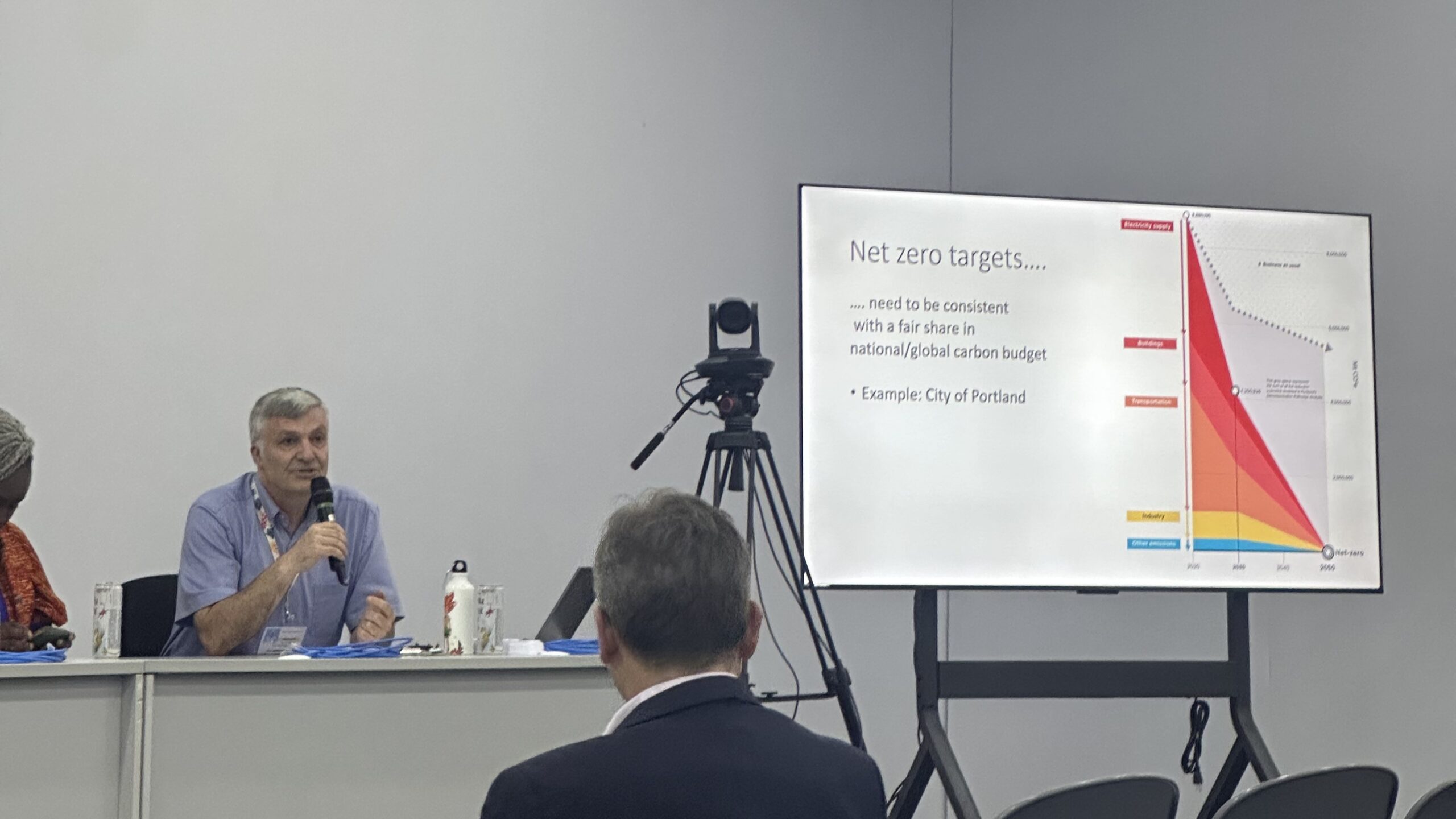
Karl Steininger – University of Graz

Karl Steininger addressed the challenge of allocating carbon budgets at the local scale, highlighting fairness as a key dimension for policy evaluation. While carbon budgets are traditionally defined at national level, cities increasingly set net-zero targets that must remain consistent with their “fair share” of national or global budgets. Presenting empirical results for EU cities, he proposed a flexible framework adaptable to different regulatory contexts where equity, wellbeing, and sufficiency thresholds should guide the distribution of mitigation efforts. Such an approach can inform financing strategies and ensure that urban transitions remain both equitable and consistent with broader climate goals.

Benedetta Lucchitta – SUR Lab Bocconi University

Benedetta Lucchitta examined two financial instruments suitable for Nature-Based Solutions (NBS) at the local level, focusing on their contribution to both mitigation and adaptation. NBS enhance urban resilience and wellbeing, yet their deployment often depends on payments for ecosystem services, voluntary or institutional schemes that compensate actors protecting natural assets. While typically designed at national level, these mechanisms can be implemented locally through ad hoc projects engaging municipal authorities and stakeholders. She highlighted the need to embed NBS financing within local governance frameworks, using Milan as an example of how urban ecosystems can be integrated into climate strategies.

Patrizia Lombardi – Polytechnic University of Turin

Patrizia Lombardi presented the Turin “Climate City Contract”, developed through a science-based and participatory approach led by the Polytechnic University of Turin. The platform collects data on both institutional and community-driven initiatives, enabling the monitoring of mitigation and adaptation actions. She underlined that scientific evidence and stakeholder collaboration are essential to manage urban complexity and ensure that data become “digestible” tools to guide decision-making.

Céline Papin – Vice Mayor of Bordeaux; AFCCRE and CUF

Céline Papin concluded by outlining key levers to finance local climate action: (1) large-scale investments to accelerate decarbonization over the next decade; (2) mobilization of all stakeholders through public-private partnerships and semi-public companies; (3) consistent measurement and monitoring using clear indicators. Her remarks emphasized that local financing must combine ambition, inclusivity, and accountability to drive effective urban transitions.

The session was interrupted for security reasons. Jane Lumumba, Programme Management Officer for Strategy and Climate Change at UN-HABITAT Regional Office for Africa, and Tadashi Matsumoto, Head of National Urban Policy and Climate Resilience Unit at OECD, did not have the chance to present.

Report by Cristina El Khoury (EAERE Communication Support Team).

Resources

Watch Simone Borghesi’s full speech here.

Access Karl W. Steininger’s slides here.

Presentation by Simone Borghesi (EAERE President).
Presentation by Karl W. Steininger (EAERE member and Country Representative for Austria).
READ MORE
Supported Events

EMEE 2026 – 17th International workshop on Empirical Methods in Energy Economics


The Environment Centre and the Institute of Economic Studies of Charles University are pleased to announce the 17th International Workshop on “Empirical Methods in Energy Economics” – EMEE 2026 to be held on January 22-23, 2026 at Charles University in Prague (Czech Republic). The event is supported by EAERE.

The workshop

The workshop continues the long-standing tradition of EMEE meetings, serving as a forum for the presentation and discussion of innovative empirical research in energy economics. The event will bring together researchers who apply advanced econometric methods, utilise original datasets, and employ rigorous study designs to address key issues in energy and environmental policy.

Programme and format

The format of the 2026 workshop will consist of plenary presentations (i.e., no concurrent sessions), followed by brief discussions, egg-timer sessions, and poster sessions. Overall, the scientific committee will select approximately 30 papers.

The papers and posters for the 2026 workshop will be selected based on extended abstracts (3 -5 pages) structured as follows: 1) overview, 2) methods, 3) data, and 4) preliminary results.

Call for contributions

The EMEE 2026 conference particularly welcomes submissions in the areas of Experimental and quasi-experimental design, panel data, structural econometrics, and Energy and development. The deadline for submitting the extended abstracts (in PDF format) is November 25, 2025.

The Scientific Committee will review the abstracts, with acceptance decisions notified by December 10, 2025. The extended abstract should be attached as a PDF file to an email sent to the workshop address (emee2026@czp.cuni.cz). Please write “EMEE paper submission”. Registration for the workshop will be possible in December 2025.

Final papers/presentations, which will be available on the conference website, must be submitted by January 20, 2026.

Important dates

November 25, 2025 – Deadline for extended abstracts
December 10, 2025 – Notification of acceptance
December 2025 – Registration for the workshop
January 20, 2026 – Submission of final papers/presentations
January 22–23, 2026 – Conference

The venue

The conference will take place at Charles University in Prague (Czech Republic) at the premises of The Institute of Economic Studies at the Faculty of Sciences (Thursday) and the Rectorate building (Friday). For accepted participants, further details will follow.

Scientific committee

EMEE 2026 scientific committe’s members are Anna Alberini (University of Maryland, USA), Antonio Bento (University of Southern California, USA), Davide Cerruti (Vienna University of Economics and Business, Austria), Cloè Garnache (Oslo Metropolitan University and CEPE ETH Zurich), Massimo Filippini (CEPE, ETH Zurich and USI, Switzerland), Todd Gerarden (Cornell University, USA), Ken Gillingham (Yale University, USA), Sébastien Houde (Faculty of Business and Economics Lausanne, Switzerland), Li Jing (Tufts University, USA), Reinhard Madlener (RWTH Aachen University, Germany), Lucija Muehlenbachs (University of Calgary, Canada), Erich Muehlegger (University of California Davis, USA), David Rapson (University of California Davis, USA), Milan Scasny (Charles University, Czech Republic), Joachim Schleich (Grenoble Ecole de Management, France), Ulrich Wagner (Uni Mannheim, Germany), Shuang Zhang (Imperial College, UK), Jevgenijs Steinbuks (World Bank Group, USA).

Local organiser

EMEE 2026 local organiser is Milan Ščasný (Charles University, Czech Republic).

Additional information

EMEE annual workshops have been organised since 2008. Details on previous workshops and information about joining the EMEE Network can be found on the EMEE network webpage.

Please send all queries to the workshop address (emee2026@czp.cuni.cz). Further information can be found on the workshop’s website.

READ MORE

OECD COP30 event “How has the Paris Agreement shaped mitigation policy? Assessing progress at ten years”


Join the OECD online event “How has the Paris Agreement shaped mitigation policy? Assessing progress at ten years” to explore how policy action has evolved and what the next steps might be for global climate ambition. The session drew on insights from a novel global OECD survey to which EAERE members have contributed.

ECD COP30 Virtual Pavilion – Session details

READ MORE
Policy Outreach Events

COP30 Official Side Event – Local climate finance for a just transition to carbon neutral and resilient cities


The 30th meeting of the Conference of the Parties (COP30) to the UN Framework Convention on Climate Change (UNFCCC) will take place in Belém (Brazil) on November 10-21, 2025. EAERE is delighted to announce its participation in the COP30 official side event on “Local climate finance for a just transition to carbon neutral and resilient cities“. Co-organised by SUR Lab Bocconi University, European Association of Environmental and Resource and Economists (EAERE), Conseil des Communes et Régions d’Europe (CCRE / CEMR), and Polytechnic of Turin, the event will be held on November 11, 2025 at 18:30 – 20:00 Local Time / 22:30 – 24:00 (CET) in the side event room 9 in Belém (Brazil) and online.

The topic

The workshop will explore how local climate finance can support a just transition toward carbon‑neutral and resilient cities. Governance frameworks and innovative financing instruments will be discussed, while also considering their capacity to channel resources to cities in both developing and developed countries through a range of case studies.

Speakers

  • Simone Borghesi, President of EAERE, Director of FSR Climate at EUI and Vice Rector for International Relations at University of Siena
  • Edoardo Croci, Spoke 1 MUSA Scarl and Director of the SUR Lab at Bocconi University
  • Patrizia Lombardi, Full Professor at Polytechnic University of Turin
  • Jane Lumumba, Programme Management Officer for Strategy and Climate Change at UN-HABITAT Regional Office for Africa
  • Tadashi Matsumoto, Head, National Urban Policy and Climate Resilience Unit at OECD
  • Céline Papin, Vice Mayor of Bordeaux, Member of AFCCRE and CUF
  • Karl Steininger, Full Professor at University of Graz

Moderator

  • Benedetta Lucchitta, Researcher at SUR Lab, Bocconi University

Online participation

Please note that access is reserved for participants regularly registered in the ORS system. As UNFCCC Observer Organisation, EAERE was granted some badges for COP30 virtual participation. EAERE members can contact the EAERE Secretariat at eaere@eaere.org by November, 6 to obtain a virtual badge. Accreditation is on a first come, first served basis.

COP30 Virtual Platform: https://cop30platform.unfccc.int/login?url=home&Eid=68b12e4da112abc6063a9acc

READ MORE