WCEREA webinar – The political economy of carbon pricing
The World Council of Environmental and Resource Economists Associations – WCEREA hosted a policy webinar on “The political economy of carbon pricing” on September 9, 2025. Moderated by Marcelo Caffera (University of Montevideo and WCEREA Board member), it featured contributions from Bård Harstad (Stanford Graduate School of Business), Jeroen van den Bergh (Vrije Universiteit Amsterdam), and Catherine Wolfram (MIT Sloan School of Management).
Carbon pricing is widely regarded as a cornerstone of climate policy, yet current levels remain far below what is needed to achieve the Paris Agreement targets. The webinar explored why progress has been slow and how international trade, treaties, and public opinion could help raise ambition.
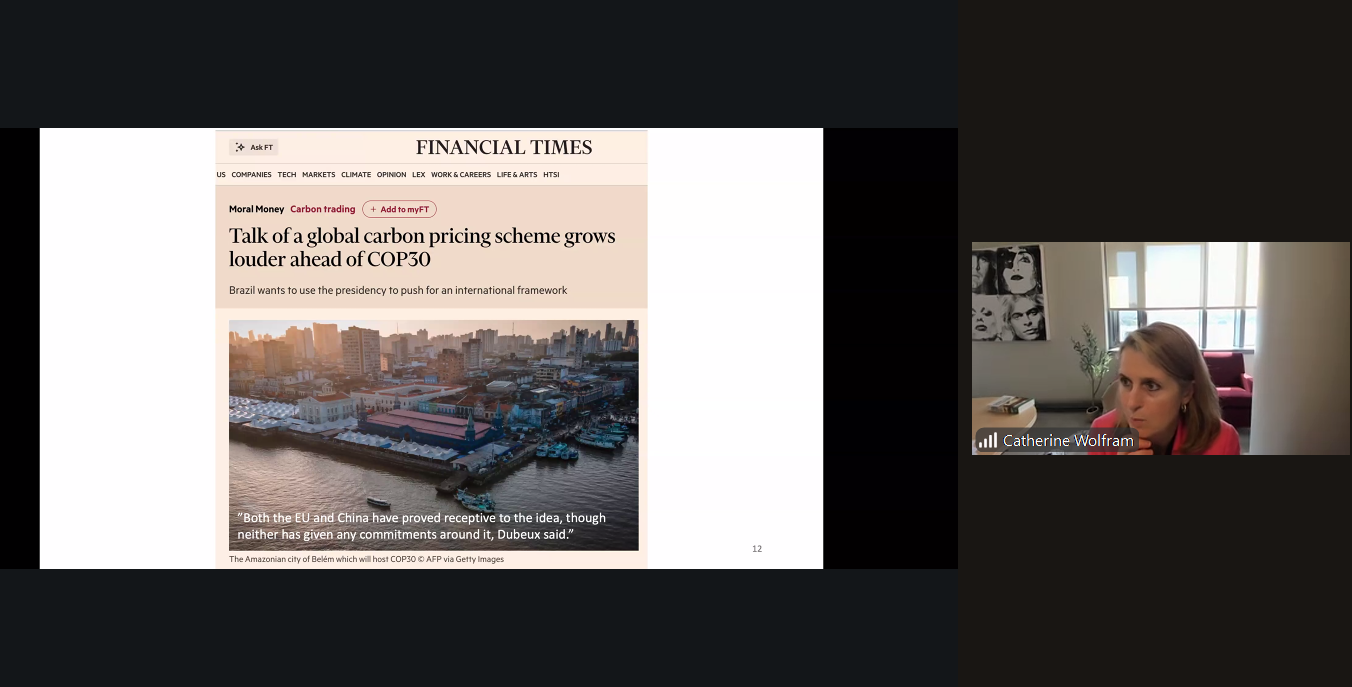
Catherine Wolfram highlighted the role of the EU Carbon Border Adjustment Mechanism (CBAM) in reshaping incentives. By charging imports at the border, CBAM reduces the benefits of free-riding and encourages partners such as Brazil and China to develop their own carbon markets. She noted that lower-income countries with cleaner electricity systems may also benefit in such a framework. Wolfram referred to her forthcoming report Building a Climate Coalition: Aligning Carbon Pricing, Trade and Development, which outlines how coordination in heavy industries could advance global carbon pricing.
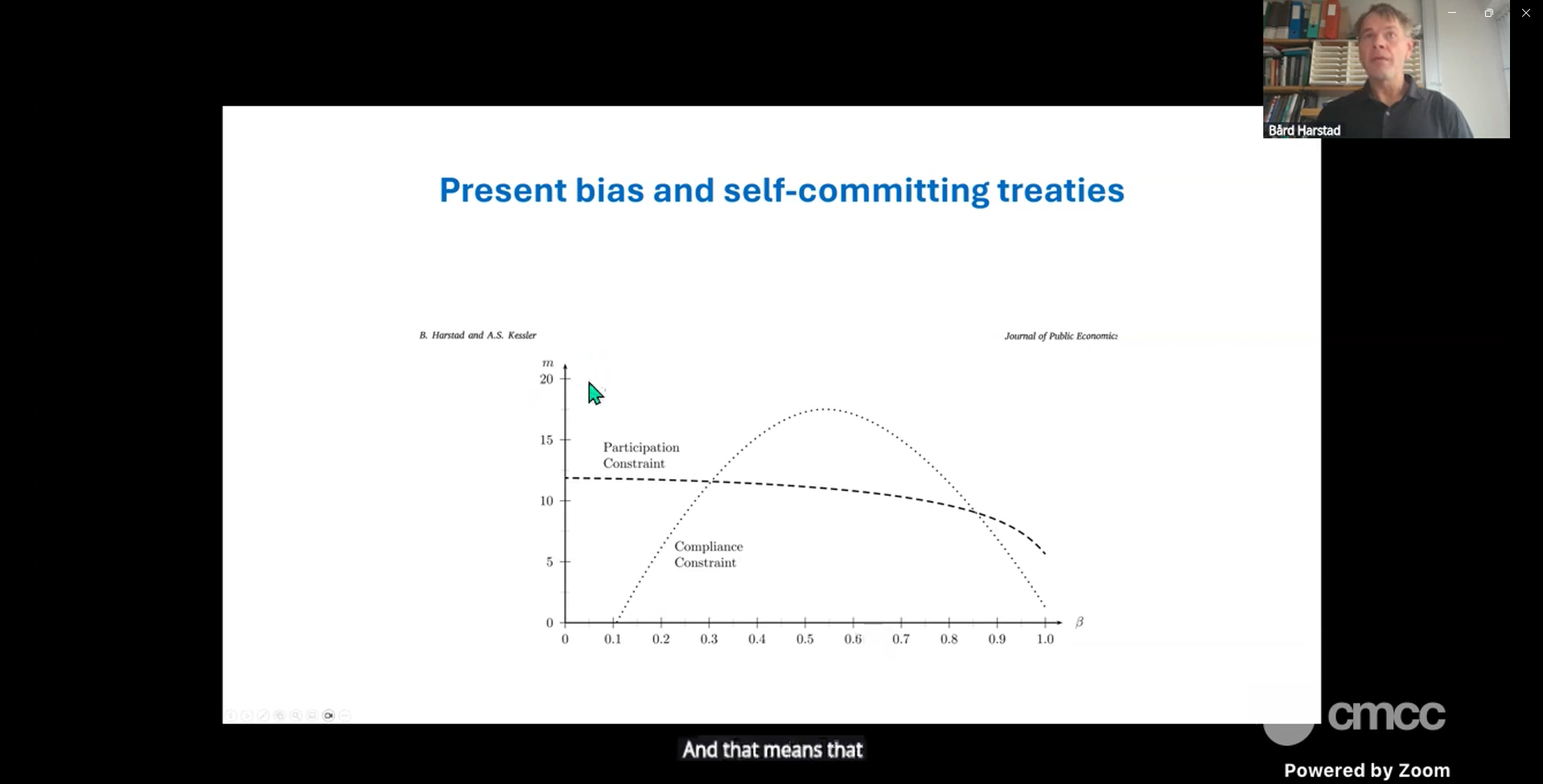
Bård Harstad underlined that carbon pricing not only reduces emissions but also stimulates innovation and renewable energy through spillover effects. He pointed to political economy challenges such as lobbying, protection of connected firms, and policy reversals after elections, which weaken commitments. International treaties can make future deviation more costly, increasing the credibility of carbon pricing. Harstad also stressed the potential of trade policy, showing how tariff functions and contingent trade agreements can provide incentives for countries to adopt and maintain stronger policies.
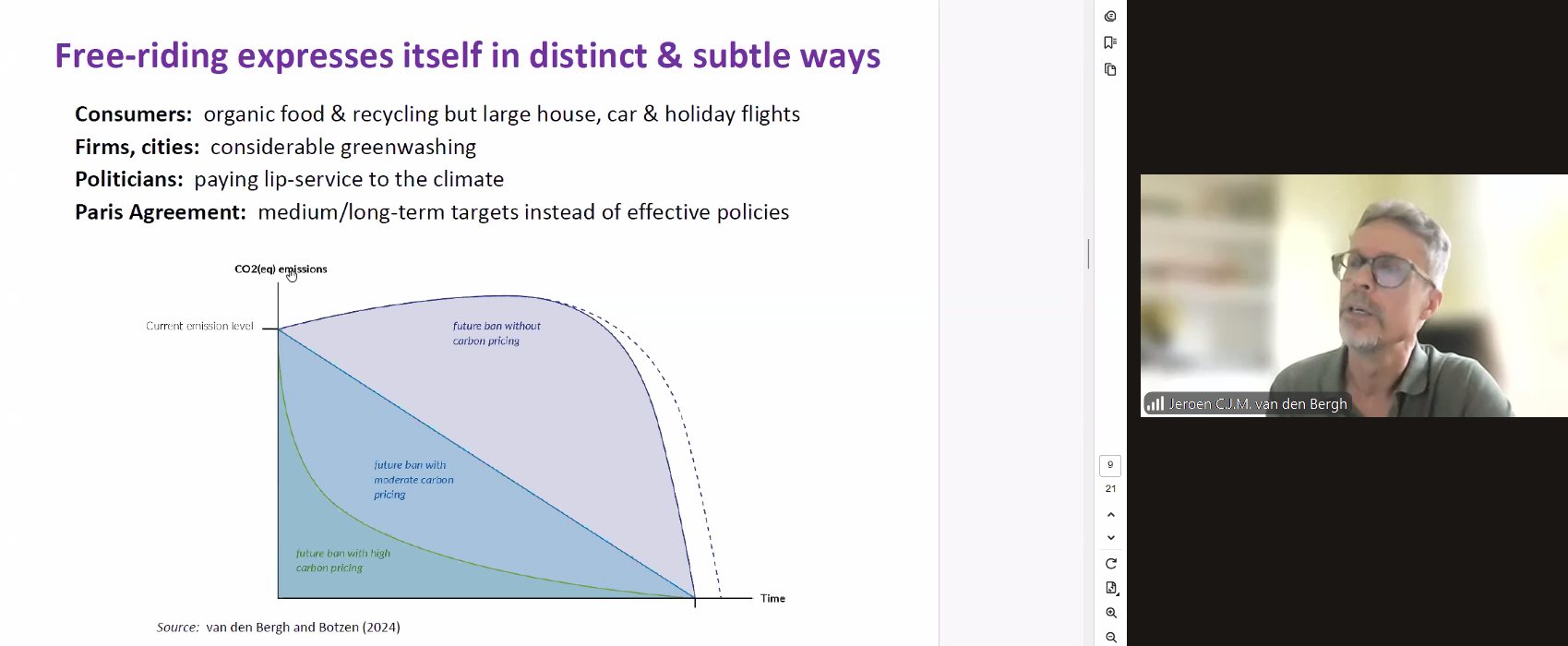
Jeroen van den Bergh focused on public support for carbon pricing, stressing that acceptance evolves over time. Citizens’ perceptions are influenced by how policies are framed, the narratives surrounding them, and their interaction with other measures. He identified opportunities to broaden the arguments for carbon pricing, combine it with complementary policies, and build feedback loops between public opinion and implemented measures.
The discussion concluded that high carbon prices are unlikely to be politically viable if pursued in isolation. Instead, carbon pricing should be part of a broader mix that includes complementary domestic measures, international coordination, and trade-based mechanisms, offering a more effective path toward ambitious and durable climate action.
Report by Antonia Pacelli, EAERE Communication Support Team.
Watch the video recording on the WCEREA YouTube channel.
Access the panelists’ slides: