Impacts, risks, adaptations

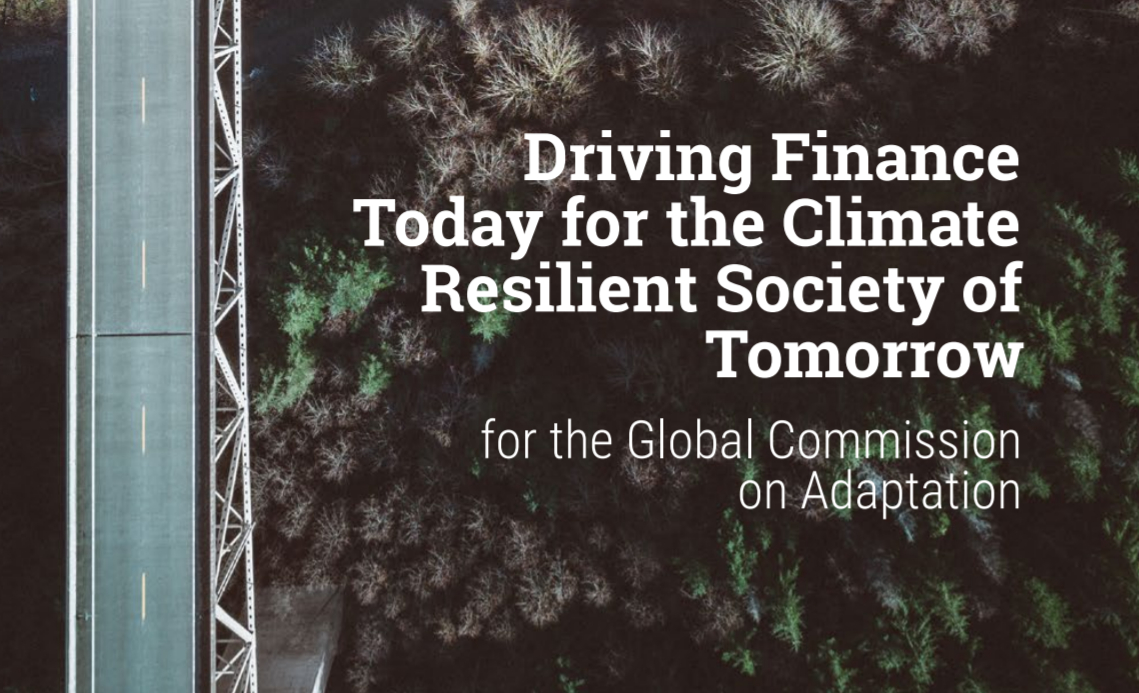
New Report: Driving finance today for the climate resilient society of tomorrow

UNEP – Finance Initiative partnered with Climate Finance Advisors to deliver this report to the Global Commission on Adaptation as a contribution to a series of technical background papers on finance for adaptation and resilience supporting the GCA’s inaugural flagship report scheduled for September 2019. The report identifies the main barriers in the financial system to accelerated investment in adaptation-related programmes and projects and proposes six sets of recommendations to unlock the financing of adaptation programmes.

“Climate change is already affecting our economy, our society and our environment and these material impacts will continue to increase even if we manage to hit mitigation targets. It is therefore of paramount importance that adaptation to climate change is considered as important as reducing carbon emissions”.

Read the Full Report

READ MORE
Economy & carbon markets

Women’s Digital Financial Inclusion in Africa

|Source: Bill and Melinda Gates Foundation|

African governments are at the forefront of efforts to harness digital technologies to build more inclusive economies. Double-digit growth in mobile phone ownership in the first half of this decade has triggered a surge of innovative digital tools and services across the continent. However, the benefits of the digital age are not being shared equally. Women—especially those living in poor and marginalized communities—are most likely to be on the wrong side of a persistent digital divide.

This year, the Group of Seven (G7) outlined an agenda to fight inequality. As part of this agenda, the G7 Partnership for Women’s Digital Financial Inclusion in Africa will support African governments, central banks, and financial institutions in their efforts to build more inclusive, sustainable, and responsible digital financial systems, ensuring that 400 million more African adults are financially included—nearly 60 percent of whom are women. Essential to efforts to expand digital financial inclusion to women in Africa are five pillars that fall into three categories: infrastructure, regulation, and planning.

Read online

READ MORE
Economy & carbon markets

Economists’ Statement on Carbon Pricing

The Policy Outreach Committee (POC) of the EAERE prepared a statement on carbon pricing to be proposed for endorsement to the whole community of economists in Europe and worldwide.
It aims to convey the European perspective on carbon pricing and to draw the attention of policy-makers to its importance as a key instrument, even though not the only one, to achieve the future de-carbonization targets.

In a short but clear statement, economists underline that a price on polluting activities is a crucial and efficient way to reduce GHG emissions. Even though not the only instrument, if properly designed carbon pricing can induce large-scale emission reductions. A price on carbon prompts companies to invest in carbon-free solutions and to improve energy efficiency. It sends a powerful signal, steering economic actors towards a low-carbon future. It encourages technological innovation, large-scale infrastructure development, as well as the diffusion of carbon-efficient goods and services.

Read and sign the statement here!

Read the Press Release

Read the article on FT

READ MORE
Cities

Green roofs in New York City

The New York City Council just approved the Climate Mobilization Act: a #GreenNewDeal4NY to mitigate the effects of greenhouse gas emissions from buildings. GHG emissions are a primary cause of climate change.

In New York, buildings are responsible of almost three-quarters of all emissions in the city. The “green roofs” measure is part of a package of legislation developed by the New York City Council to reduce greenhouse gas emissions and improve energy efficiency for certain buildings in New York City.

Read all on the Climate Mobilization Act on the NYC Council website here

READ MORE
Economy & carbon markets

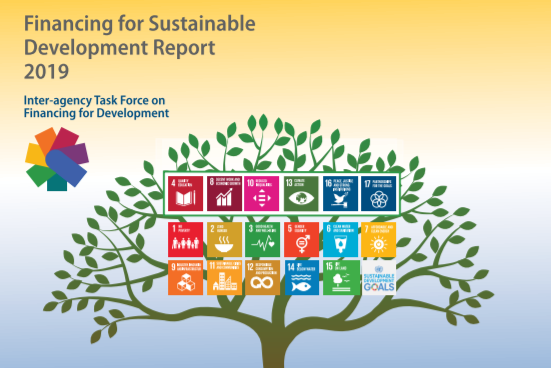
Financing For Sustainable Development Report 2019

The UN Inter-agency Task Force on Financing for Development has released the fourth edition of the “Financing for Sustainable Development Report”, which provides a comprehensive assessment of the state of sustainable finance in 2019. The report offers recommendations for achieving concrete progress on financing for development, with a focus on the five SDGs under review at the July 2019 High-level Political Forum: those on quality education, decent work and economic growth, reduced inequalities, climate action, and peace, justice and strong institutions.The Report urges the international community to use this chance to reformulate the national and international financial systems to allow for sustainable development. recommends that the international community should use this opportunity to reshape both national and international financial systems in line with sustainable development. At stake is our ability to comply with the 2030 Agenda.

Read the Full Report

READ MORE
Impacts, risks, adaptations

Global Assessment Report on Disaster Risk Reduction

The UN Global Assessment Report on Disaster Risk Reduction (GAR) is the flagship report of the United Nations on worldwide efforts to reduce disaster risk. The GAR is published biennially by the UN Office for Disaster Risk Reduction (UNDRR), and is the product of the contributions of nations, public and private disaster risk-related science and research, among others. The GAR is a comprehensive review and analysis of disaster risk and risk management. #GAR19 moves beyond disaster risk to consider the pluralistic nature of risk: in multiple dimensions, at multiple scales and with multiple impacts.

Download & read the report here

READ MORE
Ecosystems & biodiversity

IPBES 2019 Global Assessment Report on Biodiversity and Ecosystem Services

This report – the first ever inter-governmental global assessment on biodiversity – has been prepared by 150 leading experts from 50 countries, with backgrounds from natural and social sciences and the support of other 250 experts collaborating to the Intergovernmental Science-Policy Platform on Biodiversity and Ecosystem Services (IPBES). Its aim is to inform better policies and actions towards the protection of biodiversity in the coming years.

The report has been finalized and prepared for approval during the 7th Session of the IPBES Plenary on 29 April – 4 May 2019 and will be published later this year. A Summary for Policy-Makers with key messages and main findings has been launched at UNESCO world headquarters in Paris on 6 May 2019. You can read the Summary for Policy-Makers here.

This Global Assessment builds upon the earlier IPBES reports, and covers all ecosystems based on land with the exception of Antarctica, analysing changes over the last 50-year period.
The Report is expected to inform policy makers on the next steps to take in the coming decade, and also to raise awareness about the importance of multi-sectoral policies and decision-making processes.
For more information, read the IPBES preview here.

READ MORE
Impacts, risks, adaptations

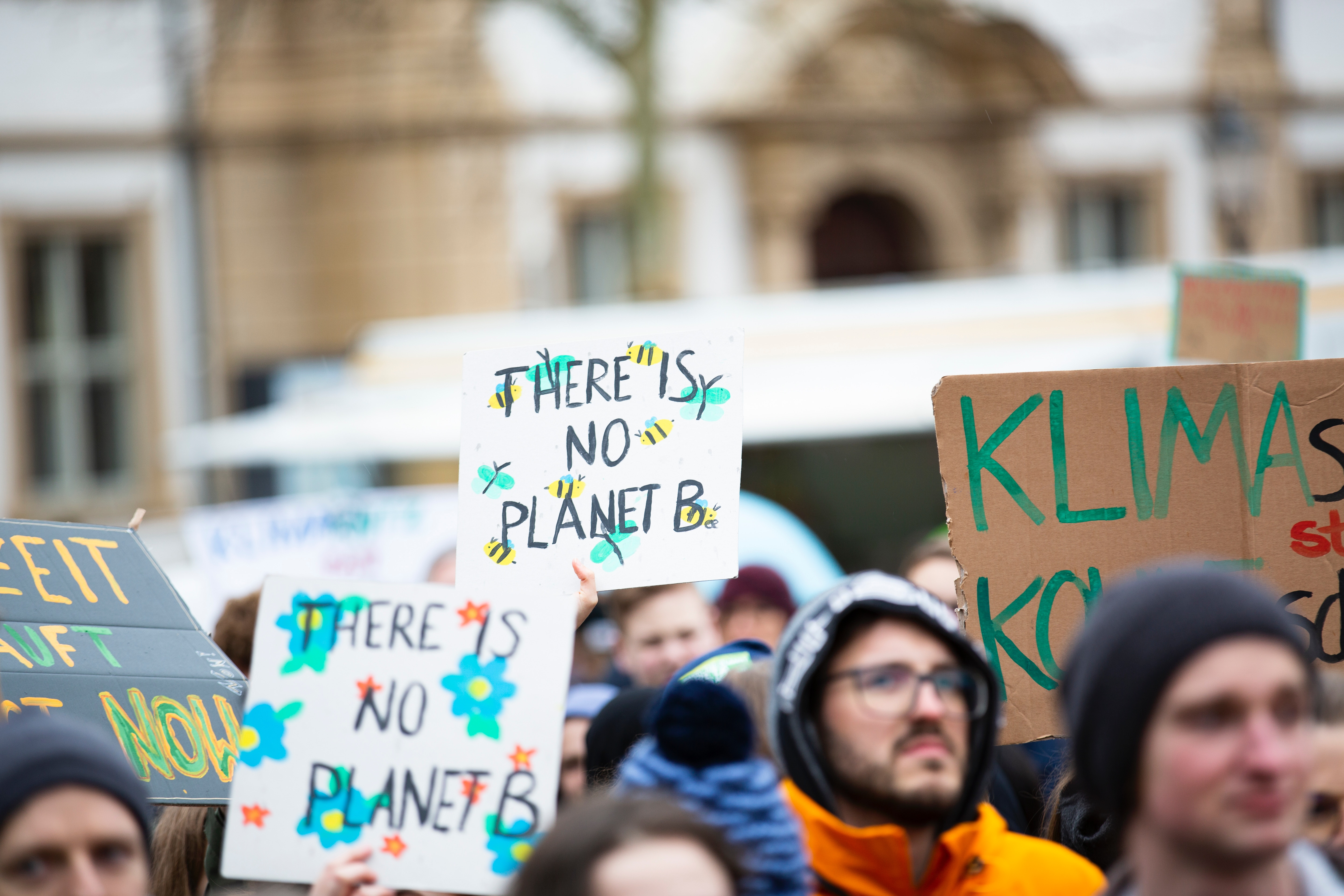
Greta Thunberg meets EAERE President at the Italian Senate

Young Swedish activist Greta Thunberg will be in Italy on April 18. She will meet EAERE President Carlo Carraro during the conference promoted by the President of the Italian Senate Elisabetta Casellati, titled “Climate: it’s time to change”. They will discuss the global climate crisis with other high-profile speakers: Antonio Navarra, President of the Euro-Mediterranean Centre on Climate Change Foundation (CMCC); Enrico Giovannini, Economist and spokesperson of the Italian Association for Sustainable Development (ASviS) and Daniela Ducato, Founder of Edizero.

Follow live:  #SenatoTV #SenatoInstagram
Live streaming: http://webtv.senato.it/webtv_live

Official press release from the web site of the Italian Senate: https://www.senato.it/comunicato?comunicato=1587

READ MORE
Water, agriculture, forestry

World Water Development Report 2019

The WWDR, coordinated by the World Water Assessment Programme (WWAP), is a joint initiative of the UN agencies and entities which make up UN-Water, working in partnership with governments, international organizations, non-governmental organizations and other stakeholders. The WWDR is an annual and thematic report that focuses on different strategic water issues each year and its aim is to provide decision-makers with the tools to implement the sustainable use of our water resources. The report includes regional aspects, hotspots, examples and stories; this makes it relevant to a broad range of readers, at different levels and in different geographical areas.

The United Nations World Water Development Report 2019 – Leaving no one behind was launched on 19 March during the 40th session of the United Nations Human Rights Council (UNHRC), in conjunction to the World Water Day. It showcases improvements in water resources management and access to water supply and sanitation services, demonstrating their importance to various social and economic inequities. The goal is that ‘no one is left behind’ when it comes to benefiting from the multiple opportunities that water provides.

Download and read the Full Report


READ MORE
Cities

New report by World Bank & World Resources Institute: Integrating Green and Gray

“Integrating Green and Gray – Creating Next Generation Infrastructure” is a joint report from the World Bank and the World Resources Institute (WRI) that aims to advance the integration of green and gray infrastructure solutions. It focuses on the global growing infrastructures crisis, driven by climate change and population increase. It provides insights, solutions and examples for “putting nature to work”. The report analysis the technical, environmental and economic dimensions of a typical project assessment and also outlines the enabling conditions required to promote a successful implementation of green-gray projects. Its aim is to encourage timely action both in the policy and practice fields.

Download & read the Full Report

Photo credits: The World Bank Group

READ MORE