EAERE Visiting Programme
In 2024 EAERE launched its Visiting Programme. This programme aims to provide financial assistance of a gross EUR 3,000 for a visiting period ranging from a minimum of 3 months to a maximum of one year at a university or research institute abroad.
Eligible candidates must be members of EAERE at the time of the application and during the visiting period and must be either PhD students or postdoctoral researchers who have completed their doctoral degree within the past two years.
The launch of the call for applications for the next Visiting Programme is scheduled in autumn 2026.
Visiting Programme 2027
Eligibility
Eligible candidates must be members of EAERE at the time of the application and during the visiting period and must be either PhD students or postdoctoral researchers who have completed their doctoral degree within the past two years. Candidates are required to submit the following documents:
- Curriculum Vitae (CV);
- A two-page description of their research programme during the visiting period;
- A letter of acceptance from the host university or research institute, including the name of the supervising tutor and the proposed duration of the visiting period, which must commence in 2027.
Selection process
Applications will be reviewed by a Selection Committee appointed by EAERE. The selection criteria will primarily focus on the quality of the proposed research programme. All else being equal, priority will be given to candidates from developing countries or those whose visiting period takes place in a developing country.
Application and notification
Applications must be submitted by October 31, 2026. Selections will be made by November 2026, and successful candidates will be notified of the outcome by December 2026. To apply fill in the application form.
Financial support
Financial support provided by EAERE amounts to a gross EUR 3,000 and will be disbursed in three instalments:
- The first instalment will be paid in the month preceding the start of the visit.
- The second instalment will be paid upon submission and approval of a brief mid-term progress report, co-signed by the supervising tutor, within one month of approval.
- The third instalment will be paid within one month of submission and approval of a final brief report, co-signed by the supervising tutor.
We encourage qualified candidates to submit their applications for consideration. For any inquiries or further information, please contact the EAERE Secretariat at eaere@eaere.org.
Selection committee
Lassi Ahlvik (Chair), Mireille Chiroleu-Assouline, Valentina Bosetti
Visiting Programme 2026
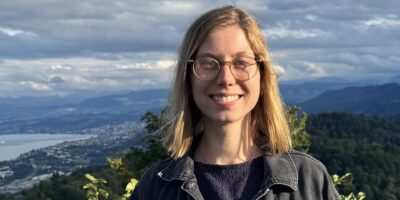
Sophie M. Behr
The project “Building Decarbonization, Energy Crisis and Distributional Impacts” by Sophie M. Behr, PhD candidate at the DIW Berlin and the Technical University Berlin, has been selected for the EAERE 2026 Visiting Programme at Columbia University. To reach climate goals as well as protect households from energy price shocks, retrofitting buildings with energy efficiency improvements, such as insulation and heating system upgrades, is crucial. However, despite large subsidies, progress remains slow. During her research stay, she plans to advance two research projects on residential energy use, building sector decarbonization, and its distributional implications. The first project studies households’ reaction to policy measures in the 2023 energy crisis. The second project assesses the effects of retrofit subsidies on retrofit propensity and costs, and their distributional impact.
Selection committee
Alessandro Tavoni (Chair), Madhu Khanna, Thomas Sterner.
Visiting Programme 2025
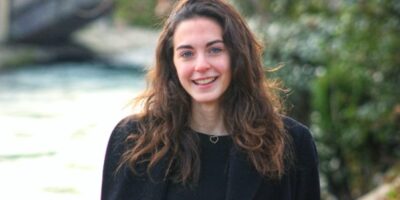
Marta Buso
The project “Offsetting or reducing? An experimental evaluation of willingness to offset dietary emissions” by Marta Buso, PhD Candidate in Environmental Economics at Vrije Universiteit Amsterdam, has been selected for the EAERE 2025 Visiting Programme at King’s College London. Demand-based interventions, such as promoting vegetarian/vegan diets, are key to reducing dietary emissions. However, Voluntary Carbon Offsets can also mitigate the negative environmental impact of meat consumption. She plans to conduct two field experiments: one at an international conference and another in the KCL student cafeteria. These experiments will provide further empirical insights into consumer dietary choices and whether fiscal interventions and nudges can reduce diets’ environmental impact.
Selection committee
Alessandro Tavoni (Chair), Madhu Khanna, Thomas Sterner.